
n the broader market, both the BSE Midcap and Smallcap indices, were up 1.2% and 0.7% each.


The crisis in Indian banking has now reached a point where the NPAs of many public-sector banks are higher than their net worth

The finance minister has stayed true to her commitment to fiscal consolidation, even though the pace of the decline in the deficit could have been faster, notes A K Bhattacharya.

The slowdown in corporate revenue growth over the last one year has begun to reflect in India Inc's capital expenditure, or capex. The country's top listed companies are going slow on fresh investment in capacity expansion, in line with a deceleration in their top line growth. The combined fixed assets of the listed companies, excluding banking, finance services and insurance (BFSI) and the government-owned oil & gas firms, were up 10.1 per cent year-on-year (Y-o-Y) during April-September 2023 (H1FY24) - the slowest in 18 months - as against 21.1 per cent Y-o-Y growth in H2FY23 (October 2022-March 2023) and 11.6 per cent growth in the April-September 2022 period (H1FY23).

Fresh buying by domestic institutional investors and better-than-expected June quarter results from some blue-chip companies boosted investor sentiment

Banks are likely to cut rates even further, say finance minister Arun Jaitley.
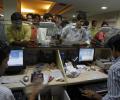
Control over PSU banks is what is allowing the government to drive this scheme.

Of the 11 licence holders, only eight remain in the fray as concerns about profitability and rising competition are making them think twice before jumping in.

'The Reserve Bank's independence has remained a work in progress, an enduring challenge that the nation has been grappling with on an ongoing basis,' says RBI Deputy Governor Dr Viral Acharya.

'India has the potential to do a lot more to take advantage of the time today where we stand to gain, geopolitically and in terms of market attractiveness.'

Investors need to evaluate how they stack up against other high credit quality fixed-income options before putting money in them.

'LIC's proposed investment will come out of what is technically called the 'policyholders funds'.' 'As the name implies, these monies belong to policyholders; that is, you, me and 25 crore others who have taken a total of 30 crore policies from LIC.' 'It is not the government's or LIC's money to play poker with,' says S Muralidharan, former managing director, BNP Paribas.

Today, banks are being asked to discover niche strengths and focus on them

More and more PE players are willing to test the waters now, just in case they become early entrants in a future booming business.

Kerala's election discourse operates surreptitiously. Its explicit face focuses on important national and local issues. At the same time, it seeks to secure apt communal equations to ensure votes, notes Shyam G Menon.

The story of Sahara India Pariwar founder Subrata Roy, who died in Mumbai on November 14 aged 75, is the stuff of movies - of a spectacular rise and an equally spectacular fall. Born in Araria, Bihar, Roy was 30 when he set up Sahara in 1978. He started with a capital of about Rs 2,000, a peon, a clerk and his father's Lambretta scooter in Gorakhpur, eastern Uttar Pradesh, writes Tamal Bandyopadhyay in his 2014 book, Sahara: The Untold Story. Sahara was not his first venture.

Indian start-ups breathed a sigh of relief after the UK government facilitated the acquisition of the now-defunct Silicon Valley Bank's (SVB's) British arm by HSBC. In a bid to allay fears, the US Federal Deposit Insurance Corporation (FIDC) announced recently that it had transferred all deposits of start-up-focused SVB to a newly created bridge bank and all depositors would have access to their money. President Joe Biden also sought to reassure jittery depositors that they can have confidence that the US banking system is "safe".

Mr Modi, it came across, did not want to be seen as favouring any one business group.

A strong start-up ecosystem can propel investment, jobs, and demand creation, and for that, substantial growth capital is required.

Investors widened their bets on optimism that upcoming general budget -- to be unveiled next month - would contain incentives for corporates, which will help boost the economy

'Nirmalaji must consider herself a very lucky finance minister, partly because of the government's response to covid and partly because we as a nation have done very well as an economy, post pandemic.'

India Inc on Thursday pitched for continuation of reforms while ensuring tax and policy stability in the forthcoming Budget to prop up the economy hit hard by the COVID-19 pandemic. In the virtual pre-Budget consultation held with Finance Minister Nirmala Sitharaman, industry chambers said that government measures will help firmly entrench the nascent signs of recovery being currently seen in private investment. Capital expenditure by the government through enhanced infrastructure spending should in the meantime continue to support growth, CII president TV Narendran said.

The meeting came amid a face-off between the central bank and the finance ministry over issues ranging from appropriate size of reserves that RBI must maintain to ease of lending norms to step up growth in an election year.
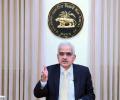
The challenge for the RBI in 2024 is likely to be less about containing elevated inflation and more about curbing excessive financial market exuberance and a 'problem of plenty', notes Sajjid Chinoy, Chief India Economist JP Morgan.

India has a huge untapped population which doesn't have facilities for financial aid and insurance, and it is perhaps plausible to look at the option of having niche players catering to smaller sectors akin to non-banks and microfinance institutions in lending, said Rakesh Joshi, member (Finance & Investment), Insurance Regulatory and Development Authority of India (Irdai). Speaking at the Business Standard BFSI Insight Summit, Joshi said, "Today, most of our insurance companies operate at a national level. There is arguably a case for having differentiated operations, which cater to niche sectors the same way we have non-banking financial companies (NBFC) and microfinance institutions in lending." "The capital requirement for niche players may not be as large as those having national ambitions. "Enabling these niche players, which require lower capital, will enhance the penetration in areas which hitherto had not seen traction from large players," he said.

We asked colleagues, present and past, to reflect on a man who has made such a difference to their lives and careers. Here it is then, a rich collection of memories that offer enchanting glimpses of the enigmatic Ajit Balakrishnan.

Finance Minister Nirmala Sitharaman on Monday reduced the time limit for reopening of income tax assessment cases to three years from six years, while for serious tax fraud cases where concealment of income is Rs 50 lakh or more it would be 10 years.

M&M was the top gainer in the Sensex pack, soaring over 10 per cent, followed by L&T, IndusInd Bank, Bajaj Finserv, SBI, Bajaj Finance, ICICI Bank and Kotak Bank. On the other hand, HUL, ITC, Titan TCS and Bharti Airtel were among the losers.

Top losers in the Sensex pack include Bharti Airtel, Infosys, Asian Paints, RIL, Coal India, HDFC Bank, HDFC, TCS, ONGC and M&M, falling up to 3.09 per cent.

Around 75 per cent, or 372 stocks, that are part of the BSE500 are trading at least 10 per cent below their all-time high levels, despite the index hitting a record high 20,515 points on the BSE in intra-day trade on Wednesday, surpassing its previous high of 20,390 touched in March 12. The index, which accounts for 93 per cent of BSE listed companies' market capitalisation, has gained 8 per cent from its recent low of 18,983, touched on April 19. In comparison, the benchmark S&P BSE Sensex gained 6 per cent over the same period, but is still nearly 4.5 per cent away from its all-time high of 52,517 that it hit on February 16.

Axis Bank was the top loser in the Sensex pack, shedding over 4 per cent, followed by Asian Paints, SBI, IndusInd Bank, ICICI Bank, Bajaj Finance, HDFC and Reliance. On the other hand, Bajaj Auto, Hindustan Unilever, UltraTech Cement, TCS, Bajaj Finserv and Infosys were the gainers.

Under the watchful eyes of five wise men, who know the industry well, banks will not find it easy to hoodwink the system, says Tamal Bandyopadhyay.

Ajit Mishra, vice president, research, Religare Broking, answers your queries.
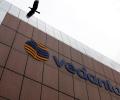
Vedanta investors were jittery on Tuesday as its share price fell and bond yields of its parent firm rose following concerns raised by a rating agency on its capability to repay debt maturing later this year. Shares of the mining and metals major were down by 7 per cent on Tuesday to Rs 268 a piece on the BSE. The company has lost market valuation of 30 per cent in the last one year and 13 per cent since January 1 this year. Yields on the bonds of Vedanta Resources, the parent firm of the BSE-listed Vedanta, shot up to 39.8 per cent - showing investors' rising concern over the group's debt situation

'Stick to FDs of shorter tenures, preferably one-two years.'

'Hacking of an ID or an account will have the same impact on a user in a city and one in a small town.' 'Security is like a railroad, you create it to last for every customer.'

The final guidelines to link the interest rate to external benchmarks will be issued by the end of this month

The continuing fiscal stimulus is heavily tilted towards capex, to the extent that it chips away a part of revenue spending. Accounting for other areas of revenue expenditure, such as salaries, pensions, subsidies and defence (committed spend), the room to spend on welfare schemes, health and education will narrow in FY22.

The finance ministry is not only keen to split the roles of CMD, but also wants to appoint them for a fixed tenure of five years.
